

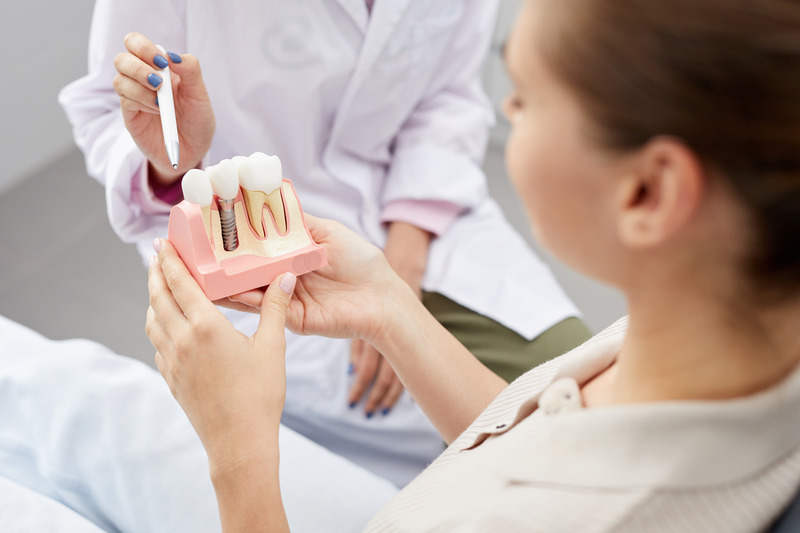
One of the first questions people ask when they start exploring tooth replacement with dental implants is, “how much is enough?” Unfortunately, the answer isn’t a simple number. How many fixtures you need depends on how many teeth you’re missing, where they are, and what kind of restoration will be placed on top. If you’re curious about how your periodontist breaks it down, continue reading.
Missing One Tooth
If you’re missing a single tooth, you’ll typically only need one implant. In this scenario, it’ll be placed directly into your jawbone and topped with a crown that’s custom-crafted to blend into your surrounding teeth. It’s the most straightforward implant procedure, and the one most people think of when they picture the results.
Missing Several Teeth in a Row
When you’re missing more than one tooth in a row, you’re no longer in a one-for-one situation—which is good news for you. Instead of working one titanium implant into each socket, your periodontist can place two implants to support a bridge.
This means one implant will be placed on one side of the gap, and another on the other. Then, a customized bridge of porcelain pontics (false teeth) will be placed over the top. Using this method, your periodontist can replace several consecutive teeth while cutting costs and preserving more of your smile.
Missing All of Your Teeth
Full tooth loss doesn’t require a whole mouthful of implants. Sometimes patients picture their gums looking like a porcupine with metal sticking out everywhere—not so! With as few as four to eight strategically placed implants, your periodontist can create a sturdy base for a full implant denture.
All-on-4 is one of the most well-known versions of this approach. This method uses four longer implants that are angled into the thickest areas of your jawbone. Then, a full arch of teeth is attached on the same day. It’s a faster, more accessible option that still delivers the same bone-preserving benefits implants are known for.
What Else Affects the Number?
Beyond how many teeth are missing, a few other factors come into play. The health and density of your jawbone and the location of your missing teeth, in particular, are a big part of the decision. Your periodontist will evaluate all of this during your consultation using imaging and a thorough exam.
Every implant treatment is planned per patient, so there’s no universal answer to how many you’ll need. The best way to decide is to have a conversation with your periodontist. They can look at your specific situation, give you an answer, and start moving toward your goals.
About the Practice
At BPS Periodontics, our team of board-certified periodontists serves patients across two convenient Connecticut locations in Farmington and Simsbury. From single-tooth implants to full-arch restorations, we provide comprehensive implant care entirely in-house—no outside referrals needed. If you’re ready to dive into dental implants, call us at the most convenient office near you or click here to schedule your consultation online.